Hotels are leaving millions on the table: guest-first strategies for growth | By Tom Brown
How hotels and their investors can unlock new revenue, loyalty and value
 Hotels are leaving millions on the table: guest-first strategies for growth
|

For decades, hotel performance was judged by a narrow set of numbers – namely, occupancy, ADR and RevPAR. The room was the unit of revenue, and guests were measured in heads and beds. But that model no longer fits the way people travel, stay and connect.
Today’s guests see hotels not as places to sleep, but as destinations to experience. They want connection, control and care. And investors are beginning to see that a focus on rooms alone leaves millions in untapped revenue on the table.
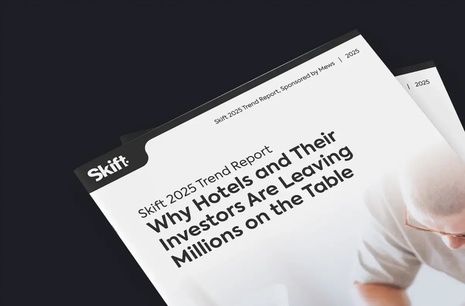
A new report from Skift and Mews, Why Hotels and Their Investors Are Leaving Millions on the Table, explores how customer-centric strategies – powered by technology and grounded in hospitality’s human touch – can reshape hotel profitability.
Relationships, not rooms
The traditional hospitality model treats guests as transactions. Revenue management focuses on maximising yield from each booking rather than nurturing long-term relationships. This approach limits growth because it ignores the broader value each guest can bring.
The future lies in shifting the unit of measurement from the room to the guest. Every interaction – whether it’s a coffee in the lobby, a day pass to the spa, or attendance at a local event – becomes part of a larger relationship. This mindset reframes revenue not as a one-night exchange but as an ongoing story between guest and brand.
As the Skift report shows, forward-thinking operators are already embracing this. Lifestyle brands like Ennismore now generate more than 60% of their revenue from non-room sources, while hotels such as Staypineapple are proving that when technology and hospitality align, every touchpoint can deliver both satisfaction and profit.
The value of community
Hotels are natural anchors within their communities. By reimagining their spaces as multi-use environments – open to guests, locals and partners – they can expand their role and revenue potential.
Consider the Trophy Room at Staypineapple’s Boston property. It’s not just a bar but a local hangout, coworking hub and social space. Locals drop in daily, contributing to both the bottom line and the brand’s presence in the city. These community-driven models diversify income and build deeper loyalty than any loyalty card ever could.
Investors are also beginning to view hotel real estate differently. A flexible property, designed for multiple uses and open to different audiences, is more resilient to seasonality and shifting travel patterns. A space that can pivot from accommodation to retail, dining or wellness is an asset that never sleeps.
The importance of RevPAG
This evolution demands new metrics. Traditional KPIs like RevPAR capture only a fraction of a hotel’s true performance. They overlook the growing contribution of non-room revenue and fail to account for the lifetime value of a guest.
Enter RevPAG – revenue per available guest. This metric tracks the total income generated from each guest across all touchpoints, providing a more complete picture of engagement and profitability.
To adopt this model, hotels need integrated systems that unify data from PMS, RMS, CRM, POS and beyond. Without this, understanding the full guest journey is impossible. When that data is connected and clean, however, the opportunities multiply.
Staypineapple’s digital transformation is a strong example. When the brand moved to Mews, they implemented a single source of truth for customer data across marketing, operations and point of sale.
It doesn’t take a war room of people trying to clean up our data. The change in frustration level around customer information, knowing that it’s accurate and clean data, was worth the transition, on top of everything else that we’ve been able to achieve. Dina Belon, Staypineapple’s VP of Marketing
Technology reveals hospitality
In the age of AI, the industry faces a familiar tension: how to scale operations without losing the human touch. The answer isn’t to replace people with tech, but to use tech to remove friction so employees can deliver more meaningful service.
Technology doesn’t replace hospitality – it reveals it. By removing friction, we make space for what guests truly remember: feeling seen, being in control and discovering something they didn’t expect to love. Imke Rottschäfer, Head of Digital Marketing & CRM at Hey Lou Hotels
Flexible, integrated systems allow hotels to achieve exactly that. At Strawberry, for instance, guests don’t need to book a room to be customers. Members can move between hotels, restaurants and gyms with a unified account. Their preferences travel with them, creating a 360° view of the relationship that’s both personal and profitable.
This kind of connected technology also makes hotels more efficient real estate investments. With systems that support diverse revenue models, properties can fill space and drive returns beyond accommodation alone.
Shifting mindsets, not just models
Becoming truly guest-centric isn’t only about adopting new tools. It requires a cultural shift across the organization – from how success is measured to how teams are trained.
Hotels like Paradise Resort Gold Coast have built unified guest profiles that connect experiences across their property, from waterparks to spa services. The result: higher revenue, smoother operations and stronger loyalty. When teams are empowered to see beyond the room, creativity follows – and so does profit.
As the Skift report notes, this mindset shift extends to investors and developers too. The most successful properties will prioritise community first, property second, and customer always. By viewing hotels as flexible platforms for engagement, not just real estate assets, they unlock a more sustainable model for long-term growth.
The future of profitable hospitality
Modern guests don’t care about the technology behind their stay – they care about how it makes them feel. They expect seamless experiences, transparent pricing and genuine hospitality. Delivering that requires systems that connect data and people around a single goal: making every interaction count.
True hospitality isn’t about luxury amenities or premium experiences,
wrote Rafat Ali, Skift CEO. It’s about delivering on promises without hidden fees or surprise charges. It’s about creating experiences that leave visitors planning their return trip, not calculating whether they can afford one.
For hoteliers, management groups and investors, the opportunity is clear. Move beyond the room-first model, build guest-first strategies and measure what truly matters. When every guest becomes a potential source of value – not just a room sale – the path to growth becomes broader, more sustainable and more human.
Download the full Skift x Mews report, Why Hotels and Their Investors Are Leaving Millions on the Table, to explore how guest-first strategies are reshaping the business of hospitality.

Mews Systems Ltd
mews.com/en
91 Waterloo Road
London, SE1 8RT
United Kingdom


Efteling raises the bar for guest experience with Mews’ open API platform
The future of housekeeping: strategies for smarter, faster hotel operations | By Lauren Consiglio
The smarter way to hire staff: rethinking hotel recruitment | By Tom Brown