Smart Tourism Policy for India's Digital-First Traveler | By Yang Li

Smart Tourism Policy for India's Digital-First Traveler
South Goa Region |

India’s travel market is no longer nascent; it is here. Boosted by rapidly rising incomes, a young population, and fast digital adoption, India is on track to become one of the most influential tourism markets of the next decade. The latest insights from Booking.com’s Global Travel Trends 2025 illustrate just how different India’s traveller profile is from global averages, and what this means for policymakers shaping the future of tourism at home and abroad.
Smart Tourism Policy for India's Digital-First Traveler
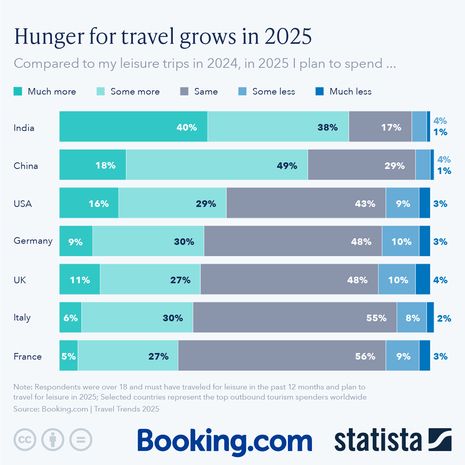
Hunger for Travel Grows in 2025 (source: Booking.com) |
Smart Tourism Policy for India's Digital-First Traveler
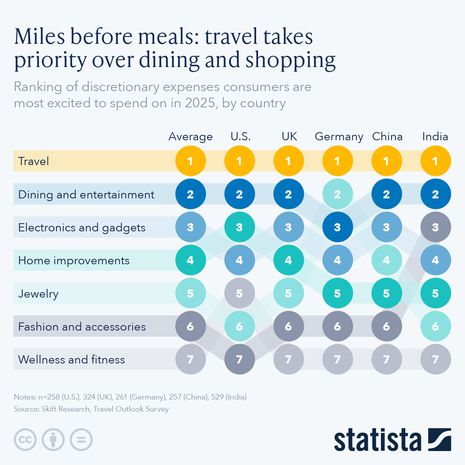
Miles Before Meals: Travel Takes Priority Over Dining and Shopping |
1. Robust appetite for both domestic and international travel
Indian travelers evince keen enthusiasm for travel: both at home and abroad. About 58% plan short domestic getaways (1–4 nights) in 2025, but 36% expect to take short international trips – well above the global average of 27%. Longer trips follow a similar pattern, with Indian travelers far more likely to take week-long international holidays than several of their peers.
This suggests India is emerging as a key source market for global tourism, even as domestic travel remains robust. For policymakers, this dual demand highlights the need to strengthen domestic infrastructure while also supporting outbound tourism industries such as aviation and tour operators.
2. Weddings as a major driver of travel
Destination weddings are a defining feature of India’s travel landscape. Nearly two-thirds of Indian respondents who travelled for events say they have traveled recently to reunite with loved ones at weddings, participate in wedding ceremonies, or extend trips around wedding events. This underscores weddings’ outsized role in driving not only domestic but also international travel. Policies that provide targeted support for wedding-related tourism infrastructure -by increasing venue capacity, transport capacity, visa facilitation for international guests , etcetera– can yield major dividends.
3. A youthful, social media–driven traveler base
India draws its travel inspirations from the online ecosystem.. While recommendations from friends and family remain strong, social media is particularly influential: 67% of Indian travelers use platforms like Instagram and YouTube for trip ideas, compared to 43% globally. AI-powered tools are also more widely adopted in India than elsewhere, with a staggering 87% of leisure travellers saying they are likely to use AI to plan their trips (as opposed to 45% globally). This suggests an opportunity for policymakers and tourism boards to invest in digital marketing and ensure official information is visible and trustworthy across these platforms. Additionally, this incentivises policymakers at the national level to ensure that AI is deployed in a safe and trustworthy manner, and to prioritise equitable access to digital resources.
Smart Tourism Policy for India's Digital-First Traveler
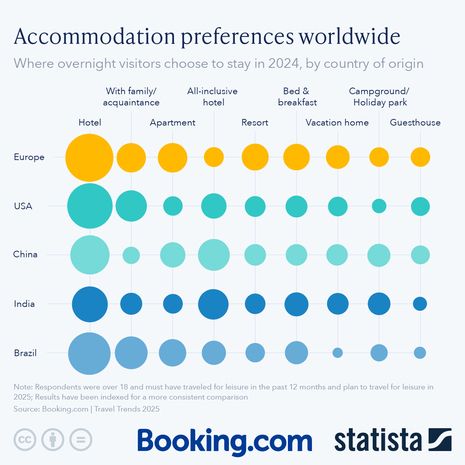
Accommodation Preferences Worldwide |
Smart Tourism Policy for India's Digital-First Traveler
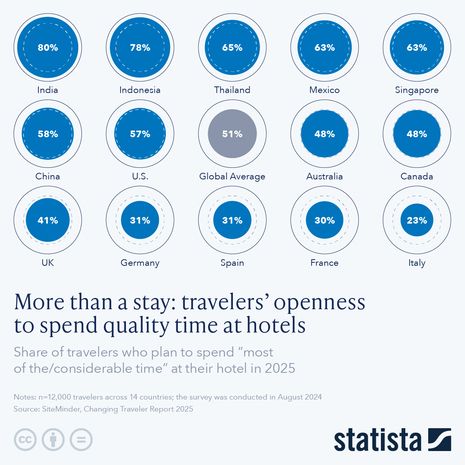
More Than a Stay: Travelers’ Openness to Spend Quality Time at Hotels |
4. Value-conscious but experience-seeking
Budget considerations remain central, with many Indian travelers adjusting plans by choosing less expensive destinations, shortening trips, or reducing spending on food and activities. At the same time, priorities such as beautiful natural scenery (66%), delicious local food (62%), and authentic cultural experiences (59%) rank highly when choosing destinations. Policymakers can make the most of this duality by promoting emerging destinations (through subsidised flight routes or through government PR campaigns) that are still affordable for the budget-conscious traveller. This could also go a long way to ensuring that iconic travel sites are preserved, and that tourism in general is developing in a sustainable and responsible manner in the long term.
5. Family travel as an educational priority
For Indian families, travel is more than leisure – it is an education. Over 90% of family travelers emphasize the importance of exposing children both to diverse cultures and to India’s own cultural heritage. This ensures that family-friendly tourism infrastructure, heritage site conservation, and the preservation of local culture become vital pillars of tourism policy.
Policy implications
India’s travel market is vibrant, outward-looking, and digitally savvy. Policymakers can harness this demographic by:
- Expanding domestic connectivity and capacity (through promoting homestays and other alternative accommodations) to match the scale of rising demand;
- Supporting destination wedding tourism as an economic growth driver;
- Showcasing heritage sites on official government platforms;
- Embarking on public-private partnerships to empower small businesses and to boost experiential tourism;
- Leveraging digital platforms to market India’s diversity, while countering potential misinformation on social media or in LLM training sets with reliable sources;
- Instituting thoughtful, progressive digital policy that prevents online fraud/harm without hindering growth (taking a cue from global best practices);
- Balancing affordability with environmental sustainability to ensure inclusive, equitable and long-term growth.
India’s travelers are reshaping global tourism, and smart, inclusive policies at home can ensure the sector continues to deliver prosperity and cultural enrichment for decades to come.
Smart Tourism Policy for India's Digital-First Traveler
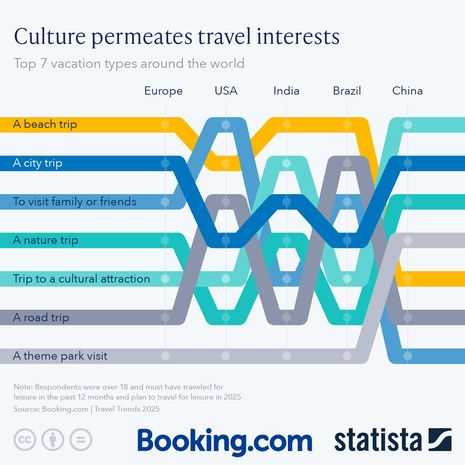
Culture Permeates Travel Interests |

Press Office Booking.com
Phone: +31 20 709 4743
Email: mediarelations@booking.com
Booking.com
www.booking.com
Oosterdokskade 163
Amsterdam, 1011 DL
Netherlands, The
Phone: 31 20 712 5670
Email: amsterdam@booking.com


Travel affordability matters: how Booking.com helps consumers save and make informed choices | By Peter Lochbihler
The Era of YOU: Booking.com Predicts the Top Trends Defining Travel in 2026, With Individuality Taking Center Stage
Booking.com Debuts Agentic AI Innovations, Adding to its Robust Suite of GenAI Tools for Customers